Austria's Licensed Platforms Integrate Local Weather Analytics into Football Wagering Adjustments
Geschrieben von Elena Washington · 30.9.2026

Austria's Licensed Platforms Integrate Local Weather Analytics into Football Wagering Adjustments
Platforms operating under Austrian licenses draw on regional meteorological networks to refine football betting markets throughout each season, and they combine station readings with algorithmic models that respond to shifting conditions on match days. Data from Austrian meteorological services flows into these systems via secure APIs, which track variables such as precipitation rates, wind speed at pitch level, and temperature fluctuations that alter ball behavior and player output. Operators update lines for totals, player performance props, and match outcomes when forecasts deviate from historical averages for specific venues.
Data Sources and Real-Time Feeds
Local weather stations positioned near major Austrian stadiums supply granular readings every few minutes, and these inputs merge with satellite observations to produce venue-specific forecasts that betting engines reference during pre-match and in-play windows. Licensed operators cross-reference this information against historical match data sets covering the past decade, which reveals patterns such as reduced goal tallies in heavy rain at certain grounds. Integration occurs through automated pipelines that flag thresholds, for instance when wind gusts exceed 25 kilometers per hour, prompting recalculations for long-range shot markets and corner counts.
During the opening weeks of the 2026-2027 campaign, which began in September 2026, several platforms adjusted over/under lines for fixtures in western Austria after early autumn showers arrived ahead of schedule. Algorithms lowered expected goal totals by 0.3 to 0.5 goals when rainfall projections reached 5 millimeters per hour, and they widened spreads on player assist props accordingly.
Adjustment Mechanisms Across Betting Markets
Weather analytics influence multiple wager categories simultaneously because rain softens pitches and slows ball roll while higher humidity increases fatigue markers tracked in player data streams. Operators recalibrate moneyline odds when temperature drops below 8 degrees Celsius, as research from European sports performance institutes shows measurable declines in sprint frequency. In-play systems monitor live feeds and trigger micro-adjustments within seconds of updated station reports, allowing bettors to see revised prices on next-goal markets or total cards without manual intervention.
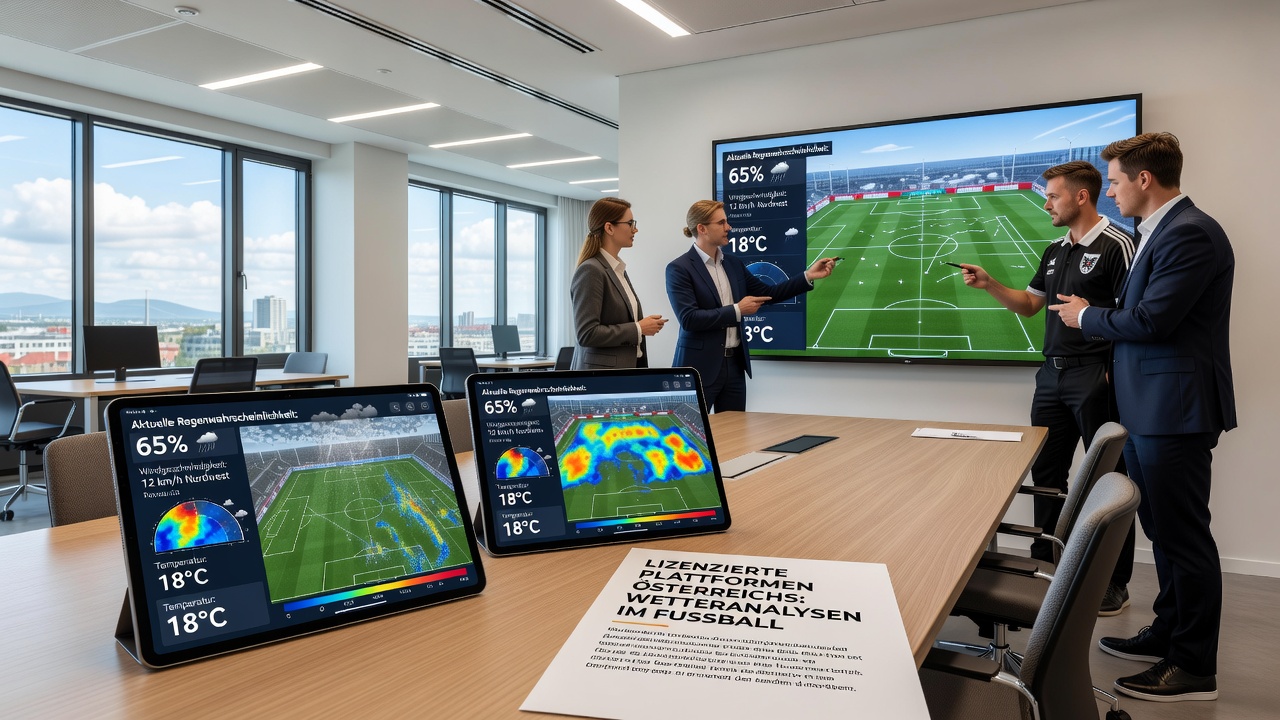
Case examples illustrate the process in action. One operator shifted the total goals line downward by half a goal for a Vienna derby after local sensors recorded sustained drizzle combined with 18 kilometer per hour crosswinds, and similar recalibrations appeared across competitor platforms within minutes. These changes rely on predefined rule sets that weigh venue elevation, drainage quality, and recent pitch maintenance reports alongside current conditions.
Regulatory Oversight and Technical Standards
Austrian licensing requirements mandate that all dynamic adjustments remain transparent and auditable, which means platforms must log every weather-triggered modification and retain records for regulatory review. Compliance teams verify that models incorporate only verified meteorological sources rather than unconfirmed forecasts, and they test algorithms against historical weather events to confirm consistent application. Data-sharing protocols with national meteorological authorities ensure standardized inputs across the licensed market, reducing discrepancies between operators.
Industry reports from the European Gaming and Betting Association highlight how platforms in regulated jurisdictions like Austria have adopted layered verification steps that include redundant weather feeds from neighboring countries when local stations experience outages. European Gaming and Betting Association documentation notes standardized testing intervals for these systems occur quarterly. Observers note that such measures maintain market integrity while accommodating environmental variables that affect gameplay.
Seasonal Patterns and Venue-Specific Considerations
Autumn and spring periods present the widest variance in Austrian weather, prompting platforms to expand the weight assigned to precipitation and temperature models during those months. Venues at higher altitudes experience more frequent wind adjustments, whereas lowland stadiums see greater emphasis on humidity effects during warmer spells. Operators maintain separate calibration tables for each ground, and these tables update annually based on aggregated match statistics paired with archived weather records.
Cooperation with academic research groups supplies additional validation layers, and studies conducted by institutions in Canada and Australia have examined comparable weather-model integrations in other regulated markets. Environment and Climate Change Canada publications on atmospheric data accuracy support the reliability of multi-source feeds used in betting contexts.
Conclusion
Austrian licensed platforms continue to refine their weather analytics pipelines as sensor networks expand and computational models improve, yet the core process remains anchored in verified local data streams that drive precise, auditable adjustments to football wagering lines throughout each season. These methods align with existing regulatory frameworks that emphasize transparency and data integrity.