Austria's Regulatory Framework and Its Effects on Transaction Security for Live Sports Wagers
Geschrieben von Elena Washington · 21.8.2026

Austria's Regulatory Framework and Its Effects on Transaction Security for Live Sports Wagers
Austria maintains a structured regulatory system for sports betting that centers on the Glücksspielgesetz and oversight from the Federal Ministry of Finance, with licensed operators facing strict rules on how they handle live wagers and the payments that support them.
These provisions require encrypted payment channels, verified user accounts, and ongoing monitoring of transaction flows, all of which shape how funds move during in-play betting on football, tennis, and other events.
Core Elements of the Austrian Licensing System
Operators must obtain a concession that spells out technical standards for data protection and financial transfers, and the authorities conduct periodic reviews to confirm that platforms meet those benchmarks before they can accept live bets from Austrian residents.
Concession holders are expected to integrate certified payment service providers that support two-factor authentication and real-time fraud detection, measures that reduce the chance of unauthorized withdrawals during fast-moving matches.
Security Mandates Specific to Live Sports Wagers
Live betting generates rapid sequences of small transactions, so the framework insists on tokenization of card details and the use of secure sockets layer protocols that update automatically when vulnerabilities appear.
Regulators also require operators to maintain segregated customer accounts that cannot be accessed by platform staff without documented approval, a step that limits internal misuse while preserving the speed needed for in-play odds updates.
Effects on Fraud Reduction and Payment Integrity
Data from licensed platforms shows that mandatory identity verification at account opening and before each deposit has lowered chargeback rates compared with earlier periods when fewer checks applied, and similar patterns appear in reports issued by the Austrian Gaming Association.
Because every transaction must pass through audited gateways, operators now route payments through processors that flag unusual betting patterns in real time, allowing intervention before funds leave the system during a live event.
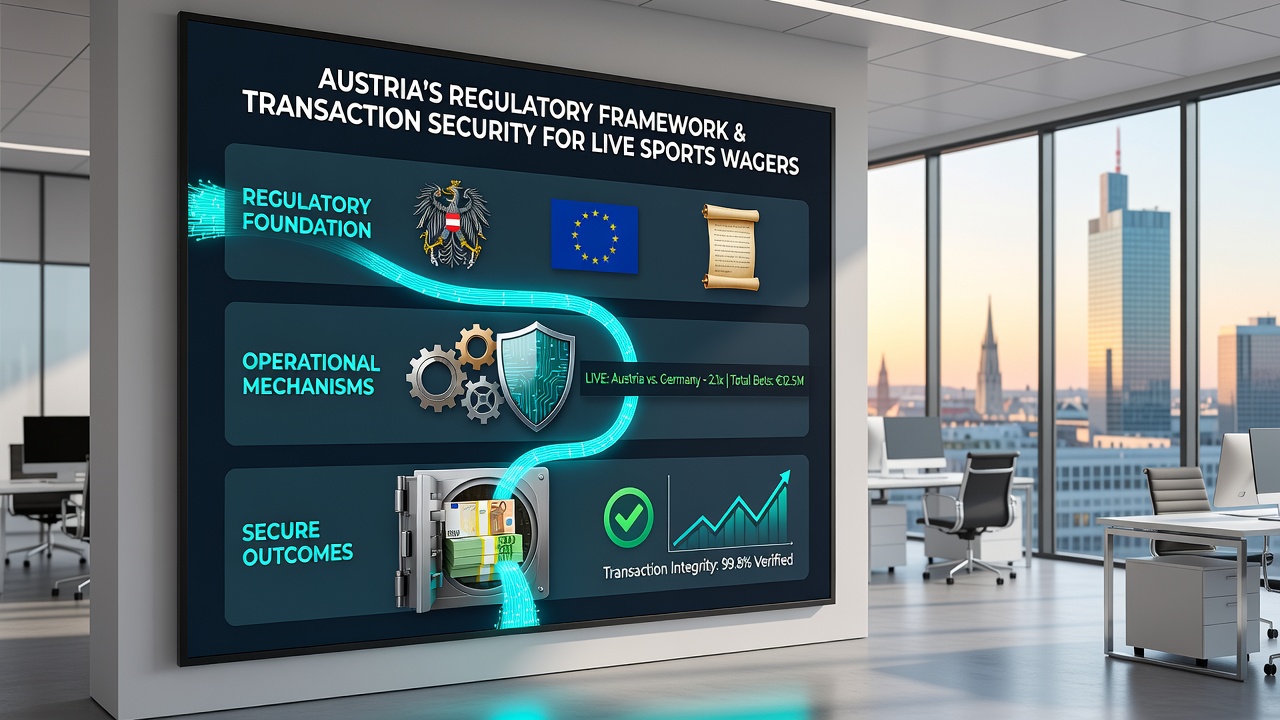
Studies conducted by independent research institutes indicate that platforms operating under Austrian concessions report fewer instances of account takeover than those serving markets with lighter oversight, largely because the rules tie each wager to a verified bank account or e-wallet.
Upcoming Adjustments and August 2026 Timeline
Amendments scheduled for implementation in August 2026 will introduce updated encryption requirements that align with evolving EU cybersecurity directives, forcing operators to adopt quantum-resistant algorithms for storing transaction logs and user credentials.
Those changes also expand the scope of mandatory penetration testing, with results submitted directly to the ministry so that any weaknesses in live-betting payment flows can be addressed before they affect users.
Industry observers note that these forthcoming standards build on existing rules rather than replacing them, creating a continuous compliance path that keeps security measures current as new payment technologies emerge.
Conclusion
Austria's combination of licensing conditions, technical specifications, and scheduled updates has produced a measurable tightening of transaction controls for live sports wagers, with operators required to document every layer of protection they deploy.
As the August 2026 milestones approach, the same framework continues to guide how platforms process payments, verify identities, and respond to emerging threats in the live betting environment.