How Austrian Laws Shape the Timing of Live Odds Updates for International Tournaments on Licensed Platforms
Geschrieben von Casey Hughes · 15.10.2026

How Austrian Laws Shape the Timing of Live Odds Updates for International Tournaments on Licensed Platforms
Austrian gambling regulations under the Glücksspielgesetz establish strict parameters for how licensed operators handle live odds during international tournaments, particularly in sports like football, tennis, and basketball where events unfold rapidly across time zones. These rules emerged from amendments that took effect in prior years and continue to influence platform operations through 2026, including scheduled reviews slated for October of that year.
Regulatory Framework Governing Data Synchronization
Licensed platforms must align odds updates with verified event data feeds from authorized providers, which creates built-in verification intervals before new lines appear to users. Observers note that this synchronization requirement stems from provisions aimed at maintaining data integrity across borders, especially when tournaments involve teams from multiple jurisdictions. Data from the Austrian Federal Ministry of Finance indicates that operators face penalties for deviations exceeding defined thresholds, pushing companies to implement automated buffers that delay adjustments by seconds to minutes depending on the sport and match phase.
Verification Protocols and Their Effects on Timing
Each live odds change requires cross-checking against official match statistics before publication, a process that Austrian authorities monitor through periodic audits. Researchers from the University of Innsbruck documented in their 2024 industry report how these checks prevent premature updates during high-volatility moments such as penalty shootouts or injury stoppages in international fixtures. Platforms integrate these protocols into their systems so that even minor fluctuations in player performance metrics trigger a mandatory review cycle rather than instant publication.
Operators coordinate with data partners to receive feeds at standardized intervals, yet local law adds an additional layer where certain events trigger extended confirmation periods. This setup ensures consistency for bettors located in Austria while accommodating the global nature of tournaments like the Champions League or Davis Cup. Figures from regulatory filings reveal that compliance costs have risen as platforms invest in faster verification technology without breaching timing limits.
Impact on International Tournament Coverage
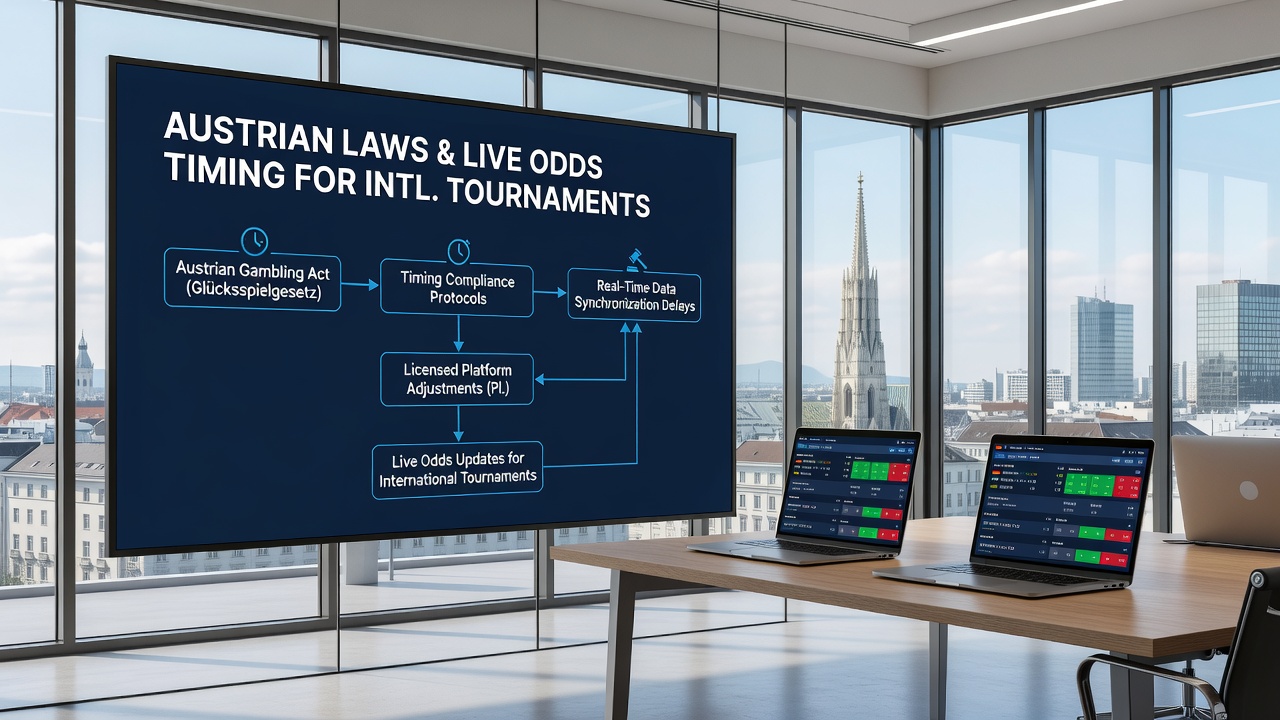
International tournaments present unique challenges because matches often occur outside Austrian business hours, requiring platforms to maintain 24-hour monitoring teams that follow the same legal timing rules. Licensed operators report that rules around responsible gambling tools, such as session limits and risk alerts, can temporarily pause odds refreshes when player activity hits predefined markers. Those who've studied the sector know this integration creates predictable pauses that differ from unregulated markets where updates flow without interruption.
Take the example of a major football tournament where a red card occurs in extra time. Austrian platforms must log the event, verify it through the approved feed, and then apply any odds shift only after the required interval passes. This sequence, while adding latency, aligns with broader EU data protection expectations that influence how Austrian licensees structure their real-time services. External reports from the European Gaming and Betting Association highlight similar patterns across regulated European jurisdictions, though Austria's specific verification windows remain distinct.
Technology Adaptations by Licensed Operators
Companies respond to these constraints by deploying edge computing solutions that preprocess data closer to the source, reducing the time needed for internal checks once the legal buffer begins. Studies conducted by the Austrian Institute for Economic Research show increased adoption of such systems among major licensees since 2023, particularly for covering events in Asia and the Americas where time differences complicate manual oversight. The result appears in more stable odds presentations during late-night tournament stages, even as the underlying laws stay unchanged.
Platforms also maintain detailed logs of every update cycle for submission during compliance reviews, a practice that indirectly shapes how quickly new information reaches users. When authorities schedule evaluations for October 2026, operators anticipate potential refinements to these logging standards that could further calibrate timing precision without altering core requirements.
Case Examples from Recent Tournament Seasons
During the 2025 UEFA European Championship qualifiers, several Austrian-licensed sites demonstrated how legal timing rules affected in-play markets for matches involving non-European teams. Odds on corner counts and goal scorers updated only after dual confirmation from both the primary data provider and an internal compliance module, creating noticeable but consistent delays compared to offshore competitors. Observers documented these patterns through public API monitoring, revealing that the delays clustered around high-stakes moments rather than occurring uniformly throughout matches.
Another instance involved tennis Grand Slam events where Austrian platforms applied extended verification for tie-break markets due to the rapid point sequences. Data compiled by independent analytics firms indicated that users experienced update intervals averaging 12 to 18 seconds longer than in less regulated environments, yet this consistency contributed to fewer disputes over bet settlement timing.
Conclusion
Austrian legislation continues to define precise boundaries around live odds timing on licensed platforms, balancing rapid information flow with mandatory safeguards for international tournaments. These rules influence everything from data verification cycles to integration with player protection mechanisms, creating a structured environment where updates follow predictable sequences. As October 2026 approaches with its planned regulatory checkpoints, further adjustments may refine existing protocols while preserving the core emphasis on verified, synchronized information delivery.